
What is an Estate Plan?
An estate plan is a comprehensive strategy to manage and distribute your assets, and ensure your wishes are followed in the event you die or become incapacitated. A will is rarely enough to accomplish this.
A good estate plan should address 4 things:
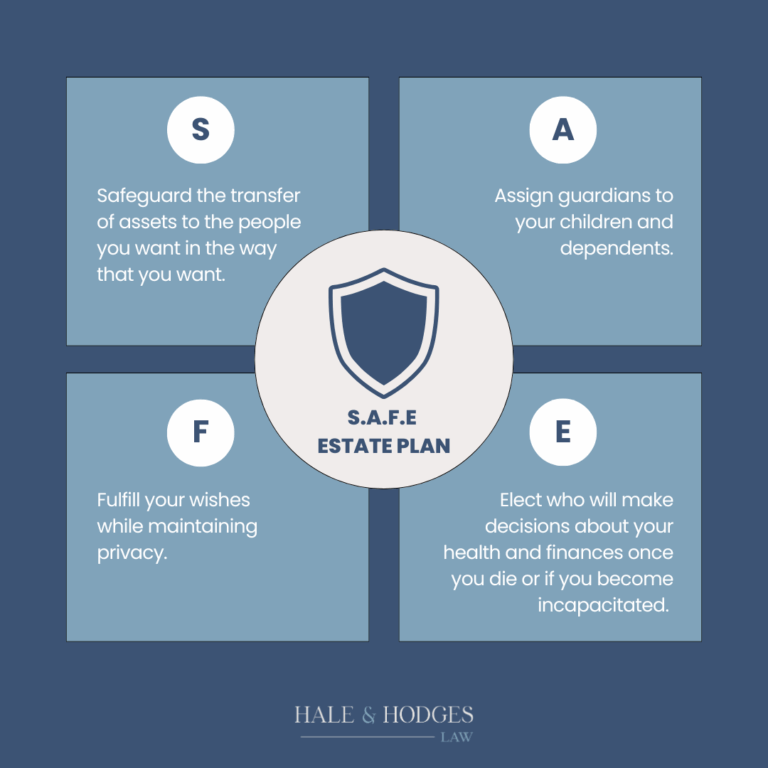
- Safeguarding the transfer of assets to the people you want in the way you want.
- Assign guardians to your children and dependents.
- Fulfill your wishes while maintaining privacy
- Elect who will make decisions about your health and finances once you die or if you become incapacitated.
Why You Need an Estate Plan in Florida…
The story of David*…
David was a successful business owner living in West Palm Beach. He was a devoted single father to his two children, Lily, aged 9, and Ethan, aged 6. David built a thriving construction company from the ground up, owned his home, and was fortunate enough to have both children enrolled in private school. However, despite his success and wealth, he never got around to creating a trust or will, always thinking he had plenty of time and would take care of it later.
One summer afternoon, David was involved in a tragic car accident and passed away unexpectedly at the young age of 44. The shocking news left his children devastated and their future uncertain. With no estate plan to guide the distribution of his estate, a lengthy, expensive, and stressful Florida probate process began.
David’s assets included his home, company, investment accounts, bank accounts, and numerous personal items. The absence of an estate plan meant that the court had to determine how to distribute his wealth and who would take care of Lily and Ethan. Luckily David’s sister, Emily, who lived nearby, stepped in to care for the children temporarily, keeping them from the foster care system. As the Florida probate process unfolded, it became clear that settling David’s estate would be a costly and time-consuming endeavor.
Emily, who hoped to become the children’s legal guardian, faced opposition from their estranged maternal grandparents, who lived in another state and saw an opportunity to gain control over the significant inheritance and potential guardianship. Adding to the complexity, David’s business partner, Steve, claimed that he had a verbal agreement with David that entitled him to a significant portion of the company. Steve argued that he should be involved in managing the estate to protect his interests, further complicating the probate process.
Moreover, David’s estranged ex-wife, Kristy, who had not been in contact with the children for years, resurfaced, demanding custody of Lily and Ethan. Kristy argued that as their biological mother, she should have the primary right to raise them, despite her history of substance abuse and neglect. The legal battle over the guardianship of the children and the estate’s assets became even more contentious. The court had to navigate the conflicting claims of Emily, the maternal grandparents, Steve, and Kristy.
Meanwhile, the estate’s assets were tied up in probate, preventing Emily from accessing the funds needed to care for the children causing her to shoulder the costs of their private school on her own. As the months turned into years, the court appointed a guardian ad litem to investigate the interests of the children, and worked on distributing his assets to whom it saw fit.
This is merely a hypothetical, but one that shows some of the potential issues that can come into play when an estate plan is not put into place.
What is an estate plan and is yours S.A.F.E.**?
An estate plan is a comprehensive strategy to manage and distribute your assets, and ensure your wishes are followed in the event you die or become incapacitated.
While a will may be part of an estate plan, it’s rarely enough to accomplish all of your goals and wishes.
An estate plan in Florida needs to be tailored to your specific needs. This is why there’s no one size fits all solution and why a Florida estate attorney can provide tremendous value.
A good estate plan should be S.A.F.E. and address four key things.
S – Safeguard the transfer of assets to the people you want in the way you want.
A – Assign guardians to your children and dependents
F – Fulfill your wishes while maintaining privacy
E – Elect who will make decisions about your health and finances once you die or if you become incapacitated.
Why should you care about estate planning?
If you don’t legally spell out what you want to happen with your home, money, possessions, and children when you die, someone will decide for you! That someone is most often the Florida Probate Court.
Besides giving up control, without an estate plan, thousands of dollars could unnecessarily go toward the probate process and to the government in the form of taxes; money that could go to your spouse, children, family, friends, charity, or other heirs.
Take David’s case, for example. Because he didn’t have a well-defined estate plan, his family’s future was left uncertain; uncertainty that could have been avoided with proper planning.
In David’s story he passed away; however, a complete estate plan deals with much more than just what happens to your stuff when you die. For example, if you are in a car accident and become incapacitated, critical medical and financial decisions could end up in the hands of a random medical provider or a court-appointed representative. That is, unless a health care surrogate or durable power of attorney are part of your estate plan.
This could result in someone you would have never chosen making these important choices for you!
Why you want to escape the Florida probate process
What happens when you die without a will or an estate plan?
In the case above, because David didn’t have a well-crafted estate plan, his estate was subject to Florida probate laws.
Unless your estate is valued at less than $75,000, something called formal administration will occur, which is the standard probate process for most estates in Florida.
Formal administration is governed by the courts and requires you to hire an attorney. It involves assigning a personal representative (also known as an executor in other states) to identify and potentially value assets, settle debts, and distribute the remaining property to certain heirs.
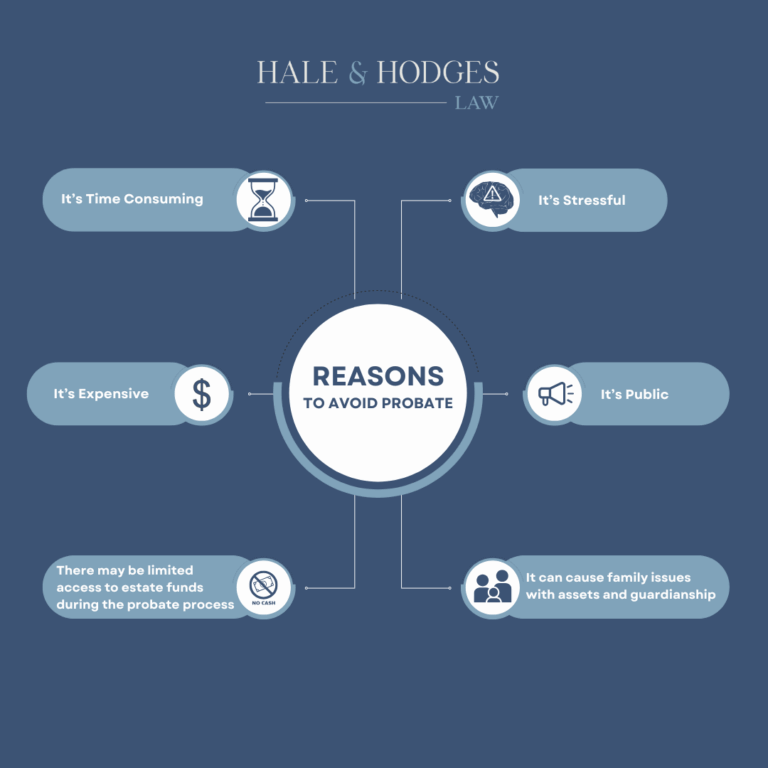
The Florida probate process can be a headache for a number of reasons.
1. It can be time-consuming
Depending on the complexity of the estate, probate can take anywhere from a few months to several years. The number of creditors, types of disputes, and the need to address taxes, can also greatly lengthen the process.
2. It’s stressful
Losing a loved one is already a difficult experience, and the added responsibility of managing their estate can be overwhelming. This is especially true if the estate is complex and drawn out over several months or years.
3. It’s expensive
The Florida probate process may involve court costs, attorney’s fees, appraisal fees, compensation for the personal representative, and other expenses that chips away at the estate you worked so hard to build.
That’s why the living trust fee or overall estate planning fees could potentially be a bargain given the high likelihood of being able to avoid the Florida probate process.
4. It’s public
Are you interested in sharing your financial information and details about your estate with the public? If the answer is no, then this is another important reason to avoid probate.
The privacy you can achieve with a revocable living trust in Florida is one of the biggest reasons why people are interested in including one in their estate plan.
5. Your children or other dependents could end up with people you would never choose
Protecting your children is a basic responsibility for every parent and ensuring their well-being and security is likely your top priority.
But how can you protect them if you’re no longer here?
Certainly, you can pass on money and assets so that their financial well-being is in place. However, if they are minors or have special needs, who is going to take care of them?
The bottom line is, if you don’t spell this out clearly in an estate plan, Florida law and the court’s decisions may not align with your wishes.
This is one of the biggest reasons why parents of young children should set up a trust and will as part of their estate plan.
6. There may be limited access to funds
During the probate process, assets within the estate are often frozen. If the beneficiaries are in need and can’t access the funds, there could be a significant financial strain during that period.
7. There’s an opportunity cost
Having your assets frozen can result in a significant opportunity cost that many people overlook. When your assets are tied up in court, they become inaccessible—not just to your heirs, but to opportunities that could generate income or grow wealth over time. For example, investment accounts might sit idle, unable to benefit from market growth or reinvestment. Real estate might remain unutilized, missing out on potential rental income or appreciation in value. This period of inaccessibility can hinder your heirs’ ability to effectively manage or build upon the legacy you’ve left them.
8. It may cause family conflict
The stress and emotional toll on family members dealing with probate can be intense, potentially causing long-lasting rifts and strained relationships. There can be disagreements on asset distribution, guardianship, and who gets to be the personal representative.
Why people don’t have an estate plan
Studies have shown only a third of Americans have an estate plan. This means two-thirds of Americans are giving up control of how their assets would be distributed, how their loved ones would be cared for, and what medical care will be provided if they become incapacitated.
So, if subjecting your family to the stress and uncertainty of the Florida probate process isn’t what you want, and let’s be honest, it’s not what most people want, the question remains:
Why don’t more people have an estate plan?
Key reasons include:
Wealth Misconception – “Estate plans are only for the wealthy”
Estate plans are for everyone. It does not matter if you have $20,000 or $20,000,000 worth of assets, they are your assets and you should decide what happens to them.
Procrastination/Overconfidence – “I have plenty of time to get around to it”
People tend to procrastinate on many things in life and this is especially true with estate planning. What people really mean when they say they have plenty of time, is that they don’t plan on dying or becoming incapacitated soon.
The unfortunate reality is that no one gets to pick the day or time either of these will happen.
Complexity and Confusion – “All the legal terms and documents are too overwhelming”
The process of crafting an estate plan from start to finish can be overwhelming. That’s why having a good Florida estate attorney can help guide you along the way. Don’t let the complexity prevent you from protecting your legacy especially since you don’t have to navigate it alone.
Cost Concerns – “It’s probably too expensive”
The cost of an estate plan will vary based on a number of things including the complexity, attorney fee structure (flat vs. hourly), types of documents required, and whether ongoing maintenance will be necessary.
An estate plan in Florida can be customized to fit a variety of budgets and you can often add components over time as needed.
The true value of an estate plan lies in the peace of mind it provides. Knowing that your wishes will be honored and your family will be secure is an intangible benefit that can outweigh the initial cost.
Discomfort with the Topic – “I don’t really want to talk about dying”
Most people don’t enjoy confronting their own mortality or what life would look like when they are no longer here, which is completely understandable.
However, getting a proper estate plan in place lifts a burden off your shoulders you may not even realize is there.
As Benjamin Franklin said, “In this world, nothing is certain except death and taxes.”
We are all going to go someday, but the thought of this shouldn’t deter you from protecting the wealth you have achieved and the ones you care most about.
Lack of Perceived Need – “I’m young, have no assets, or kids”
Everyone’s needs are different. It’s true that if you are young, unmarried, and don’t have any kids that you may not need a very complex estate plan.
However, you still need something basic so any assets or possessions you do have are passed on in the way you want. You also, at a minimum, should have a living will so it’s clear what you want to happen in the event that you are incapacitated or unable to make decisions on your own.
The #1 reason why you need an estate plan in Florida
The looming threat of the Florida probate process is enough to unsettle anyone.
But here’s the real kicker: avoiding probate shouldn’t be your main motivation for creating an estate plan.
It all boils down to one powerful word… Control.
With an estate plan, you hold the reins.
You decide the fate of your assets, your cherished possessions, and—most importantly—who will take guardianship of your children.
You have the power to keep your estate away from prying eyes and maintain privacy in most cases.
You get to determine who will make critical medical and financial decisions if you become incapacitated.
Don’t leave your family’s future in the hands of the court.
Don’t trick yourself into thinking you will always have more time.
Your wishes should be honored and your loved ones need to be protected, so your legacy can live on, according to your terms.
How a West Palm Beach Estate Attorney Can Help You Create a S.A.F.E. Plan
Whether you are looking for an estate attorney in West Palm Beach or just need a Florida estate attorney, we would love to have a conversation to see if we’re a good fit.
We practice the S.A.F.E. method to craft your comprehensive estate plan, strive to get your wishes fulfilled, avoid the probate process and paying unnecessary taxes, fees, and costs, and to pass your assets to the people you want in the way you want.
Call us today at 561-529-5420 or click on the form to set up your free estate strategy session.
*This is a hypothetical scenario. None of the information in this hypothetical references an actual client or case.
**S.A.F.E. is not a legally required method in the State of Florida.
Free Estate
Strategy Session
Enter your information below and one of our attorneys will contact you within 24 hours
Why You Need an Estate Plan in Florida...
The story of David*…
David was a successful business owner living in West Palm Beach. He was a devoted single father to his two children, Lily, aged 9, and Ethan, aged 6. David built a thriving construction company from the ground up, owned his home, and was fortunate enough to have both children enrolled in private school. However, despite his success and wealth, he never got around to creating a trust or will, always thinking he had plenty of time and would take care of it later.
One summer afternoon, David was involved in a tragic car accident and passed away unexpectedly at the young age of 44. The shocking news left his children devastated and their future uncertain. With no estate plan to guide the distribution of his estate, a lengthy, expensive, and stressful Florida probate process began.
David’s assets included his home, company, investment accounts, bank accounts, and numerous personal items. The absence of an estate plan meant that the court had to determine how to distribute his wealth and who would take care of Lily and Ethan. Luckily David’s sister, Emily, who lived nearby, stepped in to care for the children temporarily, keeping them from the foster care system. As the Florida probate process unfolded, it became clear that settling David’s estate would be a costly and time-consuming endeavor.
Emily, who hoped to become the children’s legal guardian, faced opposition from their estranged maternal grandparents, who lived in another state and saw an opportunity to gain control over the significant inheritance and potential guardianship. Adding to the complexity, David’s business partner, Steve, claimed that he had a verbal agreement with David that entitled him to a significant portion of the company. Steve argued that he should be involved in managing the estate to protect his interests, further complicating the probate process.
Moreover, David’s estranged ex-wife, Kristy, who had not been in contact with the children for years, resurfaced, demanding custody of Lily and Ethan. Kristy argued that as their biological mother, she should have the primary right to raise them, despite her history of substance abuse and neglect. The legal battle over the guardianship of the children and the estate’s assets became even more contentious. The court had to navigate the conflicting claims of Emily, the maternal grandparents, Steve, and Kristy.
Meanwhile, the estate’s assets were tied up in probate, preventing Emily from accessing the funds needed to care for the children causing her to shoulder the costs of their private school on her own. As the months turned into years, the court appointed a guardian ad litem to investigate the interests of the children, and worked on distributing his assets to whom it saw fit.
This is merely a hypothetical, but one that shows some of the potential issues that can come into play when an estate plan is not put into place.
What is an estate plan and is yours S.A.F.E.**?
An estate plan is a comprehensive strategy to manage and distribute your assets, and ensure your wishes are followed in the event you die or become incapacitated.
While a will may be part of an estate plan, it’s rarely enough to accomplish all of your goals and wishes.
An estate plan in Florida needs to be tailored to your specific needs. This is why there’s no one size fits all solution and why a Florida estate attorney can provide tremendous value.
A good estate plan should be S.A.F.E. and address four key things.
S – Safeguard the transfer of assets to the people you want in the way you want.
A – Assign guardians to your children and dependents
F – Fulfill your wishes while maintaining privacy
E – Elect who will make decisions about your health and finances once you die or if you become incapacitated.
Why should you care about estate planning?
If you don’t legally spell out what you want to happen with your home, money, possessions, and children when you die, someone will decide for you! That someone is most often the Florida Probate Court.
Besides giving up control, without an estate plan, thousands of dollars could unnecessarily go toward the probate process and to the government in the form of taxes; money that could go to your spouse, children, family, friends, charity, or other heirs.
Take David’s case, for example. Because he didn’t have a well-defined estate plan, his family’s future was left uncertain; uncertainty that could have been avoided with proper planning.
In David’s story he passed away; however, a complete estate plan deals with much more than just what happens to your stuff when you die. For example, if you are in a car accident and become incapacitated, critical medical and financial decisions could end up in the hands of a random medical provider or a court-appointed representative. That is, unless a health care surrogate or durable power of attorney are part of your estate plan.
This could result in someone you would have never chosen making these important choices for you!
Why you want to escape the Florida probate process
What happens when you die without a will or an estate plan?
In the case above, because David didn’t have a well-crafted estate plan, his estate was subject to Florida probate laws.
Unless your estate is valued at less than $75,000, something called formal administration will occur, which is the standard probate process for most estates in Florida.
Formal administration is governed by the courts and requires you to hire an attorney. It involves assigning a personal representative (also known as an executor in other states) to identify and potentially value assets, settle debts, and distribute the remaining property to certain heirs.
The Florida probate process can be a headache for a number of reasons.
1. It can be time-consuming
Depending on the complexity of the estate, probate can take anywhere from a few months to several years. The number of creditors, types of disputes, and the need to address taxes, can also greatly lengthen the process.
2. It’s stressful
Losing a loved one is already a difficult experience, and the added responsibility of managing their estate can be overwhelming. This is especially true if the estate is complex and drawn out over several months or years.
3. It’s expensive
The Florida probate process may involve court costs, attorney’s fees, appraisal fees, compensation for the personal representative, and other expenses that chips away at the estate you worked so hard to build.
That’s why the living trust fee or overall estate planning fees could potentially be a bargain given the high likelihood of being able to avoid the Florida probate process.
4. It’s public
Are you interested in sharing your financial information and details about your estate with the public? If the answer is no, then this is another important reason to avoid probate.
The privacy you can achieve with a revocable living trust in Florida is one of the biggest reasons why people are interested in including one in their estate plan.
5. Your children or other dependents could end up with people you would never choose
Protecting your children is a basic responsibility for every parent and ensuring their well-being and security is likely your top priority.
But how can you protect them if you’re no longer here?
Certainly, you can pass on money and assets so that their financial well-being is in place. However, if they are minors or have special needs, who is going to take care of them?
The bottom line is, if you don’t spell this out clearly in an estate plan, Florida law and the court’s decisions may not align with your wishes.
This is one of the biggest reasons why parents of young children should set up a trust and will as part of their estate plan.
6. There may be limited access to funds
During the probate process, assets within the estate are often frozen. If the beneficiaries are in need and can’t access the funds, there could be a significant financial strain during that period.
7. There’s an opportunity cost
Having your assets frozen can result in a significant opportunity cost that many people overlook. When your assets are tied up in court, they become inaccessible—not just to your heirs, but to opportunities that could generate income or grow wealth over time. For example, investment accounts might sit idle, unable to benefit from market growth or reinvestment. Real estate might remain unutilized, missing out on potential rental income or appreciation in value. This period of inaccessibility can hinder your heirs’ ability to effectively manage or build upon the legacy you’ve left them.
8. It may cause family conflict
The stress and emotional toll on family members dealing with probate can be intense, potentially causing long-lasting rifts and strained relationships. There can be disagreements on asset distribution, guardianship, and who gets to be the personal representative.
Why people don’t have an estate plan
Studies have shown only a third of Americans have an estate plan. This means two-thirds of Americans are giving up control of how their assets would be distributed, how their loved ones would be cared for, and what medical care will be provided if they become incapacitated.
So, if subjecting your family to the stress and uncertainty of the Florida probate process isn’t what you want, and let’s be honest, it’s not what most people want, the question remains:
Why don’t more people have an estate plan?
Key reasons include:
Wealth Misconception – “Estate plans are only for the wealthy”
Estate plans are for everyone. It does not matter if you have $20,000 or $20,000,000 worth of assets, they are your assets and you should decide what happens to them.
Procrastination/Overconfidence – “I have plenty of time to get around to it”
People tend to procrastinate on many things in life and this is especially true with estate planning. What people really mean when they say they have plenty of time, is that they don’t plan on dying or becoming incapacitated soon.
The unfortunate reality is that no one gets to pick the day or time either of these will happen.
Complexity and Confusion – “All the legal terms and documents are too overwhelming”
The process of crafting an estate plan from start to finish can be overwhelming. That’s why having a good Florida estate attorney can help guide you along the way. Don’t let the complexity prevent you from protecting your legacy especially since you don’t have to navigate it alone.
Cost Concerns – “It’s probably too expensive”
The cost of an estate plan will vary based on a number of things including the complexity, attorney fee structure (flat vs. hourly), types of documents required, and whether ongoing maintenance will be necessary.
An estate plan in Florida can be customized to fit a variety of budgets and you can often add components over time as needed.
The true value of an estate plan lies in the peace of mind it provides. Knowing that your wishes will be honored and your family will be secure is an intangible benefit that can outweigh the initial cost.
Discomfort with the Topic – “I don’t really want to talk about dying”
Most people don’t enjoy confronting their own mortality or what life would look like when they are no longer here, which is completely understandable.
However, getting a proper estate plan in place lifts a burden off your shoulders you may not even realize is there.
As Benjamin Franklin said, “In this world, nothing is certain except death and taxes.”
We are all going to go someday, but the thought of this shouldn’t deter you from protecting the wealth you have achieved and the ones you care most about.
Lack of Perceived Need – “I’m young, have no assets, or kids”
Everyone’s needs are different. It’s true that if you are young, unmarried, and don’t have any kids that you may not need a very complex estate plan.
However, you still need something basic so any assets or possessions you do have are passed on in the way you want. You also, at a minimum, should have a living will so it’s clear what you want to happen in the event that you are incapacitated or unable to make decisions on your own.
The #1 reason why you need an estate plan in Florida
The looming threat of the Florida probate process is enough to unsettle anyone.
But here’s the real kicker: avoiding probate shouldn’t be your main motivation for creating an estate plan.
It all boils down to one powerful word… Control.
With an estate plan, you hold the reins.
You decide the fate of your assets, your cherished possessions, and—most importantly—who will take guardianship of your children.
You have the power to keep your estate away from prying eyes and maintain privacy in most cases.
You get to determine who will make critical medical and financial decisions if you become incapacitated.
Don’t leave your family’s future in the hands of the court.
Don’t trick yourself into thinking you will always have more time.
Your wishes should be honored and your loved ones need to be protected, so your legacy can live on, according to your terms.
How a West Palm Beach Estate Attorney Can Help You Create a S.A.F.E. Plan
Whether you are looking for an estate attorney in West Palm Beach or just need a Florida estate attorney, we would love to have a conversation to see if we’re a good fit.
We practice the S.A.F.E. method to craft your comprehensive estate plan, strive to get your wishes fulfilled, avoid the probate process and paying unnecessary taxes, fees, and costs, and to pass your assets to the people you want in the way you want.
Call us today at the number below or click on the form to set up your free estate strategy session.
*This is a hypothetical scenario. None of the information in this hypothetical references an actual client or case.
**S.A.F.E. is not a legally required method in the State of Florida.
Free Estate
Strategy Session
Enter your information below and one of our attorneys will contact you within 24 hours
Protect the Ones You Love
At Hale & Hodges Law, we understand that legal issues involving your family can take its toll emotionally. The relationships and assets at play result in unique legal challenges. We work to simplify the process and put your mind at ease. Contact us if you or your family are in need of representation related to:
Estate Planning
Proper estate planning is a critical component of protecting your assets. Estate planning allows you to eliminate the financial uncertainties and stress that comes along with the passing of you or a family member. The drafting of an estate plan can be complex, but we are here to walk you through the steps to secure your loved ones’ future. Hale & Hodges Law can help you in your preparation of:
If you die without a will, Florida law on succession will kick in and your family will lose control over how your assets are distributed. By creating a will, it allows you to direct how your assets should be distributed and gives your family peace of mind.
A trust gives ownership of your assets to a trustee who manages those assets for the beneficiaries of the trust. This allows you to avoid probate and can help protect against creditors and lawsuits.
At Hale & Hodges Law, we can help you navigate the probate process. Probate requires numerous steps including going through the court system to identify the decedent’s assets; dealing with liens, creditors, and taxes; and then distributing the assets, while often handling those who may disagree with the distribution. This whole process can take months and differs depending on whether a valid will exists; but is necessary in either scenario. If you have questions regarding the probate process or want an attorney to help you through it, please contact us to see how we can help.
A power of attorney is a legal document that designates one person to take action on another’s behalf. These documents are critical in establishing certainty regarding important decisions for your family now and into the future.
Family Law
We believe that strong and healthy families are an integral part of our community. When disputes arise, it is our primary goal to reduce conflict, as it can cause lasting damage to a family’s relational and financial well-being. When a spouse or child are involved, legal disputes can feel overwhelming. In the event you find yourself in need of legal representation, we are prepared to fight for your rights in cases involving:
Going through a divorce is one of life’s most challenging times. Whether you are thinking of initiating the process or have been served with a Petition for Dissolution of Marriage, Hale & Hodges Law is here to help guide you through the process.
Child support is the financial responsibility of the parents for the child’s care, maintenance, training, and education. There are many factors that go into the calculations based on Florida’s Child Support Guidelines. Considerations regarding the amount of time a parent spends with the child and each parent’s income are key in the calculation process. If you are facing a dispute over child support, reach out to see how we can help.
In a divorce case, marital assets and liabilities are subject to equitable distribution. We can help you understand your legal rights and what the court may determine to be marital and non-marital in nature.
Florida law allows for temporary, bridge-the-gap, rehabilitative, and durational alimony. There are many factors that help determine if alimony is warranted for each case such as length of the marriage and each individual’s ability to support themselves. If you have questions about how alimony is calculated in Florida, we can help.
In a divorce, it is necessary to have a court-approved parenting plan regarding the time-sharing arrangement with your child. This agreement addresses time spent with the child on special occasions such as holidays and how major decisions in the child’s life will be made. At Hale & Hodges Law, we are prepared to help you navigate this critical process in your divorce case.
It's Time to Protect the Ones
You Love
Get in touch today to schedule your consultation.
Contact Us
Our Practice Areas
Where to Find Us
Contact Us
Our Practice Areas
Where to Find Us
Disclaimer :
The information displayed on this website is for informational purposes only and should not be considered legal advice. Nothing found on Hale & Hodges Law's website is intended to create an attorney-client relationship. An attorney-client relationship can only be established through a signed fee agreement by you and one of our attorneys.
*By contacting the firm, you consent to receive automated texts from Hale & Hodges Law relating to your matter.
Standard messaging and/or data rates may apply.
© 2025 Hale & Hodges Law. All Rights Reserved.